
Prodesse Property Group
Prodesse Property Group: What Bay Area Property Owners Can Verify Before Choosing a Manager

The decision is conditional, not conclusive
Choosing a property manager after seeing a company name online is a conditional diligence decision, not a conclusion about fit. A RocketReach profile describes Prodesse as a privately held, family-owned firm led by Michael and Lynn Pierce, with a team of 100 or more employees. That description can help you identify the organization you want to question, but it does not by itself establish the firm’s current San Francisco presence, the assets it will accept, the people assigned to your property, or the terms under which it will work.
Your decision should turn on whether the provider can document the controls your property needs. For a Bay Area rental, those controls may include:
- A defined process for San Francisco eviction and compliance matters.
- Named personnel, escalation points, and coverage when a dispute or urgent repair arises.
- Reporting that lets you trace rent, maintenance, notices, approvals, and owner decisions.
- Clear responsibilities for leasing, tenant communication, vendors, records, and legal handoffs.
- Fees, contract duties, termination provisions, and owner obligations that you can compare with another proposal.
Treat the profile, company pages, testimonials, and verbal answers as different types of information. Ask what each item proves, what still requires documentation, and what applies to your building rather than to a general service description. Until those questions are answered, keep Prodesse in the candidate stage rather than treating the name or broad positioning as a completed selection decision.
The first useful distinction is between identity and suitability. You may be able to identify the organization behind the name without knowing whether its current team, geographic coverage, procedures, and agreement terms fit your property. Keep those questions separate in your notes so that an answer about the firm’s history does not silently become an answer about your building.
What the available record identifies
Prodesse’s published and third-party descriptions identify a real estate organization that presents itself around income-property management and related real estate activity. A RocketReach profile describes the firm as privately held and family-owned, led by Michael and Lynn Pierce, with a team of 100 or more employees. Because that information comes from a third-party profile, ask Prodesse to provide a current company identification, the legal entity that would sign your agreement, and the office or team responsible for your asset.
The residential material presents Prodesse properties as professionally managed and maintained. It also says people are available to help 24 hours a day, 365 days a year. Those statements identify the service posture presented on the site, but they do not answer how coverage works for an owner in San Francisco or elsewhere in the Bay Area. You need the operating details behind the statement: who receives an after-hours call, which matters are treated as emergencies, who can authorize work, and how the event reaches your owner records.
The published material also identifies a residential-management leader. Prodesse’s About page names Chris O’Connor as Director of Residential Management, says he joined Prodesse in 2020, and states that he holds a California Real Estate Broker’s License. That is a specific personnel description, not proof that Chris will oversee your property or that every employee involved in your account holds the same credential.
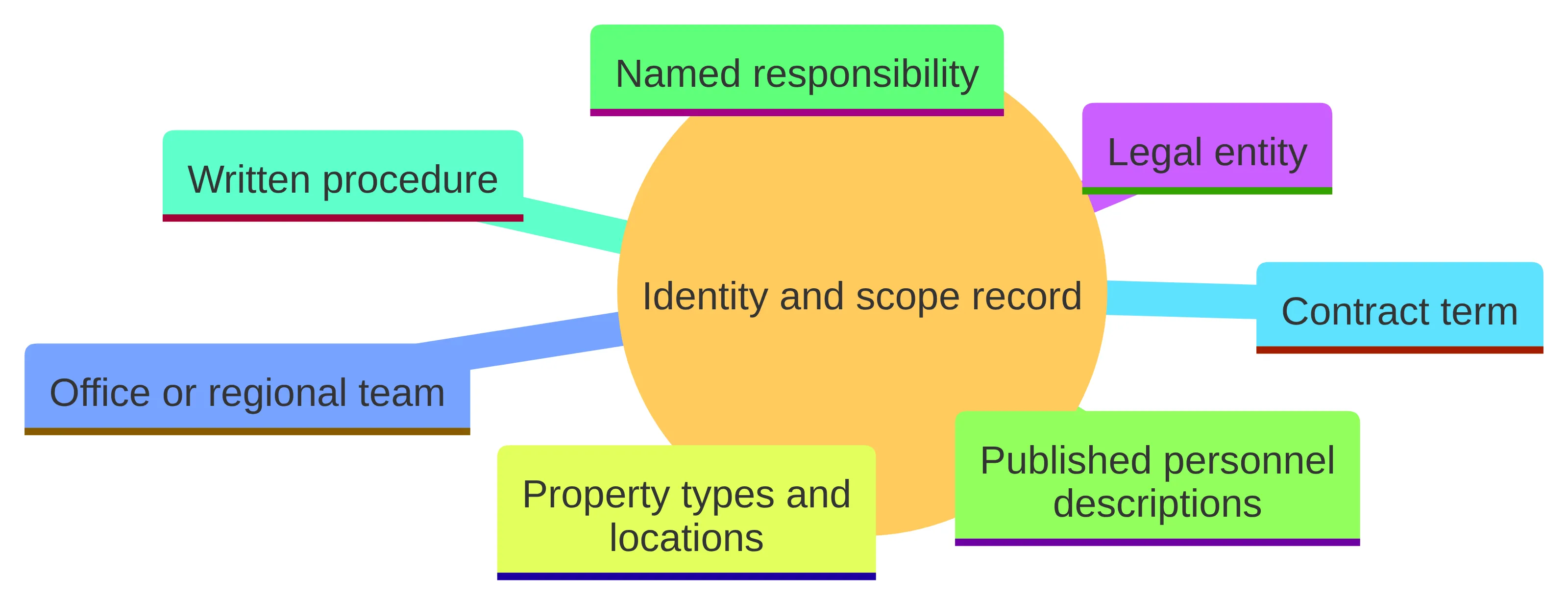
Use these points to build an identity and scope record. Record the source of each statement, then ask the provider to connect the statement to a named responsibility, written procedure, or contract term. The useful question is not whether a description sounds broad. It is whether the description can be translated into accountable work for your building.
Separate four identity questions before moving to provider fit:
- Which legal entity would sign and perform the agreement?
- Which office or regional team would receive your account?
- Which property types and locations does the proposed team handle?
- Which published personnel descriptions apply to the people assigned to your property?
This sequence prevents a third-party profile, a general residential page, and an executive biography from being treated as one complete operating record. Each item can be useful, but each answers a different question.
What Prodesse publishes about its operating model
Prodesse publishes several operating-model statements that are useful starting points for a diligence call. The About page identifies Chris O’Connor as Director of Residential Management, says he joined the firm in 2020, and states that he holds a California Real Estate Broker’s License. The residential page states that community managers receive management training through the California Apartment Association and work toward the California Certified Residential Manager designation.
Prodesse also states that people are available to help 24 hours a day, 365 days a year. Its contact page says the headquarters are open Monday through Friday from 8:30 a.m. to 5:00 p.m. and that the firm is available to address needs 24 hours a day, 365 days a year. The two statements may describe different parts of the operating model: office hours on one hand and broader availability on the other. Ask the provider to explain the distinction rather than assuming that every service, employee, or decision-maker is available at all times.
Turn each published statement into a control question:
- Who is the manager and who is the backup for your property?
- Which person receives a notice, tenant complaint, maintenance escalation, or agency communication outside office hours?
- What training applies to the people handling leasing, tenant relations, rent records, and compliance work?
- What does 24-hour availability cover, and which matters move to the next business day?
- How are calls, texts, portal submissions, approvals, and follow-up actions recorded?
- When does an issue move from the property-management team to qualified legal counsel or another specialist?
A training reference is not the same as a current designation, and a stated availability schedule is not the same as a documented response procedure. Request the names, coverage chart, escalation sequence, and sample records that connect the published model to your property. This lets you assess whether the operating promise is specific enough to manage a dispute or compliance task without relying on an informal assurance.
Ask for the service boundary in writing. A 24-hour contact promise may concern intake only, while authorization, inspection, legal review, or owner approval may follow a different schedule. The distinction matters when a tenant communication, maintenance event, or notice creates a time-sensitive handoff. Your comparison should show who receives the issue, who acts, who approves, and how you are informed.
What the record does not establish
A provider description does not establish every fact you need before signing a management agreement. The material identified above leaves several decision points for direct confirmation and written documentation.
Ask specifically about:
- Current service coverage in San Francisco and the other Bay Area locations relevant to your property.
- The property types, unit counts, building conditions, and tenancy situations the proposed team handles.
- Recent experience with San Francisco eviction categories, Rent Ordinance obligations, fair-housing procedures, and required notices.
- The legal entity, broker or responsible license information, and the people who will perform or supervise regulated work.
- The exact division between management coordination and legal advice.
- Pricing, pass-through charges, leasing fees, maintenance markups, accounting charges, reserve requirements, and approval thresholds.
- Agreement length, renewal terms, termination rights, transition duties, and owner responsibilities.
- Independent references or records that show how the proposed team handled comparable assignments.
- The meaning of any result, review, testimonial, response-time, or availability statement.
Do not fill these gaps with a general service page or a company-size estimate. A large team may provide useful coverage, but your agreement still needs to identify who is accountable for your units. A favorable testimonial may describe one owner’s experience, but it does not establish a response standard for your building. A stated credential may identify one employee, but it does not prove that the person assigned to a dispute has the same qualification.
Treat every unanswered item as a decision condition. You can proceed to a proposal comparison when the provider supplies a clear answer, a document, a named responsible person, or an explicit boundary. If an answer remains general, keep the issue open rather than converting it into an assumption.
Rank the gaps by consequence for your property. An unclear after-hours contact may affect maintenance escalation; an unclear notice process may affect a compliance matter; an unclear termination provision may affect your ability to change providers. You do not need to resolve every question in the same conversation, but you should know which unanswered item prevents a meaningful comparison and require that item before relying on the proposal.
Make eviction and compliance the first verification gate
San Francisco eviction and compliance work should be the first verification gate for a property exposed to tenant disputes or a change in possession. San Francisco’s eviction information covers multiple categories, including owner or relative move-in, Ellis Act, condominium sale, demolition or permanent removal, substantial rehabilitation, temporary capital-improvement or rehabilitation work, lead remediation, and redevelopment-related matters.
Those categories are not interchangeable. Ask the provider to identify the categories it has handled, the jurisdiction in which the work occurred, the role it performed, and the documents it can show in an appropriately redacted form. A general statement that a firm handles evictions does not tell you whether its experience matches an owner move-in, a rehabilitation project, a rent-controlled building, or another situation.
California fair housing laws apply to nearly all residential rental properties in the state, go beyond federal requirements, and continue to evolve. That makes fair-housing controls part of the operating test, not a decorative compliance statement. Ask how the proposed team applies written screening criteria, maintains consistent communications, records accommodation requests, escalates potential discrimination concerns, and keeps staff instructions current.
Use this gate before comparing headline service breadth:
- Identify the property’s city, unit type, tenancy status, rent-control context, and immediate dispute or transition issue.
- Match those facts to the provider’s documented experience rather than to a generic list of eviction labels.
- Request the notice, documentation, approval, and escalation workflow for the relevant category.
- Ask which decisions the manager coordinates and which decisions require a separate legal review.
- Require the agreement and proposal to state who owns each task and what happens when a deadline or tenant response changes the situation.
The gate does not decide whether a particular eviction can proceed. It tells you whether the provider has supplied enough process detail for a qualified review and a meaningful proposal comparison.
For a San Francisco owner, location alone is not enough. Ask whether the experience concerns San Francisco procedures rather than another California city, whether the assignment involved a comparable property, and whether the proposed team - not only a senior executive - performed the work. That distinction keeps local familiarity from becoming an unsupported conclusion about current capability.
Test the named people and process controls
Named personnel make a management proposal testable. Ask whether the proposed manager would be involved in your account, who reports to that manager, and which person would make or coordinate decisions when a tenant dispute becomes time-sensitive.
Request a simple responsibility map with these roles:
- Primary property manager.
- Backup manager and after-hours contact.
- Person responsible for owner approvals and financial reporting.
- Person responsible for notices, tenant communications, and file management.
- Maintenance coordinator and emergency escalation contact.
- Compliance lead or outside legal handoff point.
- Person responsible for transition if the agreement ends.
Then test the process rather than accepting the organization chart. Ask how the team logs a tenant communication, checks a notice before delivery, records a deadline, obtains owner approval, and confirms completion. Request sample forms or redacted records for notices, work orders, incident reports, owner approvals, and escalation logs. The sample should show the fields, handoffs, and dates that let you follow an event from intake to closure.
The proposal checklist for a property manager includes team and coverage, operating approach, reporting and controls, transition readiness, and relevant experience. Apply those criteria to the people named for your property, not only to senior leadership. A credential or management title can be relevant, but it does not identify the daily operator, the backup, or the control that prevents a missed handoff.
Require the provider to describe its legal handoff process without asking management staff to decide a property-specific legal question. The important operating issue is whether a concern is recognized, preserved in the file, escalated to the correct professional, and communicated to you with the next owner decision clearly identified.
Ask how changes are handled. If the primary manager leaves, an after-hours vendor changes, or a matter moves from routine management to legal review, your records should show who assumes responsibility and how the handoff is communicated. A proposal that names only an initial contact leaves an accountability gap unless it also explains backup coverage and transition control.
Use the property’s exposure to define the questions
Your property profile should determine the questions you ask a management provider. Start with facts that affect the work: city and county, property type, unit count, rent-control status, tenancy length, pending notices, planned renovation, owner occupancy plans, maintenance condition, and the records you already hold.
San Francisco’s eviction information includes owner or relative move-in, Ellis Act, substantial rehabilitation, and temporary capital-improvement or rehabilitation categories, among others. Do not ask only whether a provider handles evictions. Ask which category resembles your situation and what the provider would need from you before opening the file.
The details can matter even within one category. For certain San Francisco temporary capital-improvement or rehabilitation evictions, protected-status rules can apply when a child under 18 or a person who works at a San Francisco school resides in the unit, is a tenant, or has a custodial or family relationship with a tenant, and the tenant has lived there for at least 12 months. In the stated process, a tenant claiming that protected status must notify the owner within 30 days of the specified notice or written request and provide supporting evidence. These conditions illustrate why a manager must collect the right facts and preserve the right documents rather than apply a generic workflow.
San Francisco states that an owner or relative move-in eviction involves use of the unit as a principal residence for at least 36 continuous months. That statement should prompt questions about occupancy plans, documentation, communications, and the division of work between you, the manager, and counsel. It should not be treated as a conclusion about your eligibility.
At The Housing Guild, we provide resources on compliance with the San Francisco Rent Ordinance and AB 1482. Apply the same property-specific questions to any alternative: ask what the stated scope means for your building, which tasks are included, what records you receive, and where a specialist must take over. A provider earns consideration through a documented fit with your exposure, not through a broad label.
Prepare a short property brief before contacting any candidate. Include the city, property type, unit count, known rent-control status, current occupancy, open maintenance matters, pending notices, planned capital work, and the decisions you expect the manager to coordinate. This gives each provider the same factual starting point and makes differences in scope easier to identify.
What Prodesse’s published record establishes - and what it leaves open
The available material about Prodesse comes from different kinds of sources, so each statement calls for a different follow-up rather than a single conclusion.
- Identity and scale: A RocketReach profile describes Prodesse as a privately held, family-owned firm led by Michael and Lynn Pierce, with a team of 100+ employees. That profile helps identify how the firm is presented externally, but it does not by itself establish the firm’s current ownership, Bay Area coverage, property types, or staffing for a particular assignment.
Ask whether the person identified on the page would have responsibility for the proposed work, who would provide backup, and which person would handle a San Francisco compliance escalation. - Training and availability: Prodesse states that its community managers receive California Apartment Association training and work toward the California Certified Residential Manager designation. Its property page says people are available to help 24 hours a day, 365 days a year, while its contact page gives weekday headquarters hours and also states that the firm is available to address needs 24 hours a day, 365 days a year. Ask which assigned roles provide that coverage, through which channels, how an urgent matter is escalated, and how the interaction is recorded.
- Client account: Prodesse’s website publishes a testimonial describing a relationship of over 15 years and citing onsite management, backroom accounting, and legal personnel. Treat this as evidence of what the testimonial says, not as an independently measured result. Ask for a reference able to discuss a comparable property, the specific services received, and how responsibilities were divided between management staff and legal professionals.
For a San Francisco owner, the next step is a focused request for Prodesse’s unresolved evidence:
- Confirm the proposed operating scope. Ask Prodesse to state the cities and property types it would cover, the duties included, the duties excluded, and the named people responsible for leasing, maintenance, accounting, tenant communication, and compliance coordination.
- Tie eviction questions to the property’s facts. San Francisco’s eviction information covers categories including owner or relative move-in, Ellis Act, substantial rehabilitation, and temporary capital-improvement or rehabilitation evictions. Ask which of these situations the proposed team has handled, what records and approval steps it uses, and when it refers a matter to qualified counsel. Do not treat a general service description as a determination that a particular eviction is available.
- Ask for process evidence without assuming a legal outcome. Request an explanation of how notices, deadlines, tenant communications, owner decisions, and legal handoffs would be tracked. California fair housing laws apply to nearly all residential rental properties, go beyond federal requirements, and continue to evolve, so ask how the proposed team keeps its procedures aligned with the requirements relevant to the property.
- Test the personnel and coverage statements. Ask Prodesse to confirm the assigned team’s current roles and training, and explain what “available” means in practice for an emergency, a tenant dispute, and a compliance question.
- Separate the testimonial from the proposal. The testimonial’s description of onsite management, accounting, and legal personnel does not specify the scope, fees, records, response arrangements, or owner obligations for a new engagement. Require those terms in writing, along with any transition steps and termination provisions.
A response that repeats published descriptions without naming responsibilities, procedures, records, and costs leaves the central questions unanswered. If the issue concerns an owner or relative move-in eviction, San Francisco states that the unit must be used as a principal residence for at least 36 continuous months, and the city recommends seeking qualified legal advice before attempting or defending against that type of eviction. The provider’s response can inform a management comparison, but it should not replace property-specific legal advice.
Separate published claims from corroboration
A published statement, a third-party profile, a testimonial, and an operating document answer different questions. Labeling them separately keeps a favorable description from becoming a conclusion about performance.
Prodesse’s website publishes a client testimonial describing a relationship of more than 15 years and citing onsite management, backroom accounting, and legal personnel. The testimonial establishes what the client said and what the website chose to publish. It does not independently measure response times, compliance outcomes, accounting accuracy, or the work assigned to your property. Ask what part of the testimonial applies to the proposed team and request references that can discuss comparable responsibilities.
A third-party profile may provide an identity lead, but it should not replace a current company response about the legal entity, personnel, service territory, or proposed contract.
Use three labels in your comparison file:
- Published claim: A statement made by the provider or presented on its website. Record the exact scope and ask what document or procedure supports it.
- Independent corroboration: A reference, public record, contract exhibit, sample report, or other material that tests the statement from outside the original marketing language.
- Unresolved: A point that remains general, unactioned, outdated, or unsupported after you ask the provider to explain it.
Then connect the labels to the proposal criteria. A service description may address scope fit. A named coverage chart may address team and coverage. A sample ledger or escalation log may address reporting and controls. A comparable reference may address relevant experience. A contract exhibit may address commercial terms and transition readiness.
The purpose is not to discount every provider statement. It is to give each statement the weight it can support, then ask for the next piece of information needed before you make a commitment.
Use careful wording in your own notes. “The website publishes” records a first-party statement. “The reference describes” records another person’s account. “The agreement requires” records a contractual obligation. “The sample shows” records an operating artifact. These phrases prevent you from turning a description into a verified result or a promised procedure into a contractual duty before the terms are actually written.
Compare proposals by accountability
The useful comparison is a shared set of property-accountability questions, not a ranking based on service-list length. The table below uses Prodesse and The Housing Guild as two candidates while keeping the documented claim separate from the question you still need answered.
| Decision area | Prodesse Property Group | The Housing Guild |
|---|---|---|
| Eviction and compliance | Request category-specific San Francisco experience, written workflows, notice controls, and legal handoff procedures. | |
| Assigned coverage | Connect the proposed manager, backup, after-hours contact, and escalation roles to your building. | Include the people, coverage, and escalation terms in the proposal so the documented scope becomes property-specific. |
| Daily operations | Ask how leasing, tenant communication, maintenance, vendors, notices, and owner approvals move through the team. | We provide leasing, compliance, maintenance, and accounting services; ask which duties, approvals, and exclusions apply to your asset. |
| Owner reporting | Request sample owner reports, ledgers, work-order records, incident logs, and compliance tracking. | |
| Transition readiness | Require an information request, file-transfer sequence, open-work review, and responsibility map. | Require the same transition documentation rather than assuming that a stated service scope includes takeover work. |
| Commercial terms | Request itemized charges, assumptions, owner duties, approval limits, renewal terms, and termination provisions. | Request the same written terms so the comparison concerns obligations as well as monthly fees. |
| Relevant experience | Match references and examples to your city, property, tenancy, and compliance exposure. | Match our Bay Area management scope to your building and require examples or terms that address your actual exposure. |
Give each criterion a pass, conditional, or unresolved status. A conditional result means the provider has supplied a plausible answer but still needs a named person, document, sample, or contract term before you can rely on it.
This method avoids an unsupported conclusion that one candidate is superior. It shows where each proposal is specific, where each requires further work, and which unresolved item could create the greatest operating or compliance problem for your property.
Keep the comparison unranked until the same information is available for each provider. For each criterion, write the requirement, the response, the supporting item, the unresolved condition, and the owner decision that remains. This gives you a usable record without assigning a score that implies a result your evidence does not establish.
A proposal is easier to evaluate when it connects each responsibility to a person, record, deadline, approval, and charge. If any of those links is missing, ask for the missing term instead of treating the broad service category as sufficient.
Keep San Francisco legal judgment with qualified counsel
San Francisco eviction categories provide context for your questions, not a property-specific decision. Owner or relative move-in is one listed category, alongside Ellis Act, substantial rehabilitation, temporary capital-improvement or rehabilitation, and other categories.
That statement does not determine whether the facts of your tenancy, ownership, occupancy plan, notices, or building qualify. It also does not turn a property manager’s checklist into a legal determination. Ask the manager to identify the administrative work it can coordinate: collecting records, tracking communications, preparing information for review, preserving deadlines, communicating approved instructions, and reporting status.
Keep the legal question distinct from the management question. The management question is whether the provider has a controlled process, appropriate personnel, and clear escalation. The legal question is whether the specific facts support the proposed action and whether each required condition has been met. A proposal should make that division visible in its scope, exclusions, approval requirements, and handoff language.
Use this distinction for every named eviction category. A provider that can describe its process may still need a separate professional review before any notice, agreement, filing, or defense proceeds. The clearer the handoff, the less likely you are to mistake administrative coordination for a decision about legal rights.
Keep your records ready for that handoff. Preserve the lease, notices, relevant communications, rent records, ownership or occupancy information, repair records, and any other documents tied to the specific issue. The management provider can help organize the file if that work is included, but the legal conclusion belongs with qualified counsel.
Use the same gate for the alternative
At The Housing Guild, we manage San Francisco Bay Area buildings and provide leasing, compliance, maintenance, and accounting services. Compare that documented scope with Prodesse’s published descriptions using the same evidence gate; do not treat it as proof of superior performance. Our property-owner resources include compliance and rent control information.
Use that statement as a reporting question in the same way you use Prodesse’s published descriptions as questions. Ask which reports your property would receive, which decisions each report supports, how corrections are handled, and who reviews unusual balances or maintenance charges.
Apply one consistent test to both candidates:
- Does the documented scope match the property’s city, type, tenancy, and compliance exposure?
- Are the people responsible for daily work and escalation named in the proposal?
- Can you see maintenance, tenant communication, accounting, and compliance activity in usable records?
- Are the responsibilities, exclusions, fees, approval limits, and transition duties written clearly?
- Does the provider distinguish management coordination from property-specific legal judgment?
Our Bay Area scope gives you specific subjects to put into a proposal comparison. It does not remove the need to define your property or compare terms. Use the same evidence gate for The Housing Guild, Prodesse, and any other candidate so that the decision rests on documented fit rather than familiarity with a name.
The comparison should also include the limits of each stated scope. Ask which services are performed directly, which are coordinated through vendors or specialists, which approvals remain with you, and which charges fall outside the recurring management fee. Those questions apply equally to the alternative and to Prodesse.
Choose the next action from the evidence gap
You can keep Prodesse under consideration while requiring direct answers about San Francisco experience, assigned personnel, compliance workflows, records, coverage, fees, and contract duties. Build the decision packet before you compare providers, mark each unresolved item, and make the proposed scope specific to your property. If a question turns on a particular tenancy or property, have qualified legal counsel decide it before you act; a management proposal cannot replace that review.
A candidate is ready for the next stage only when the proposed scope, accountable people, records, fees, and handoffs are clear enough for a direct comparison. Use that boundary for every provider, including The Housing Guild, and let unresolved material questions determine what you ask next.
What should an owner confirm before requesting a proposal?
What should I verify about Prodesse Property Group before choosing them as a property manager?
You should confirm their current service coverage in San Francisco, the specific property types they manage, their experience with local eviction categories, and the legal entity that would sign your agreement. Additionally, ask for details on their processes for handling tenant communications, maintenance, and compliance.
How can I assess Prodesse Property Group's eviction and compliance capabilities?
Request specific information about their experience with San Francisco eviction categories, including the processes they follow for notices, records, and legal handoffs. Ensure they can provide documented workflows and examples of past cases they have managed.
What questions should I ask when comparing property management proposals?
Inquire about the service territory, scope of work, named personnel for your account, eviction and compliance procedures, reporting packages, maintenance controls, tenant communication methods, and fee structures. Ensure each proposal clearly outlines responsibilities and exclusions.
When should I seek legal advice regarding eviction matters?
You should consult legal counsel when dealing with specific tenancy or property issues that require legal interpretation or when you are unsure about the implications of eviction categories and compliance with local laws.
What resources does The Housing Guild provide for property owners?
The Housing Guild offers resources including compliance and rent control information, management of rent-controlled buildings, and over 100 standard reports to help owners understand upkeep costs.
What should I include in a property brief before contacting a property manager?
Your property brief should include details such as the city, property type, unit count, rent-control status, current occupancy, pending notices, planned renovations, and any maintenance issues.
Owner Resources
Want The Housing Guild to handle this for you?
We manage San Francisco Bay Area buildings for owners — leasing, compliance, maintenance, and accounting. Get a free proposal, or explore the service.