
General
Best Practices for a Standard Operating Procedure for Handoff
Introduction
Establishing a seamless handoff process is crucial for organizations seeking to boost operational efficiency and enhance communication. A well-defined standard operating procedure (SOP) for handoffs minimizes errors and ensures smooth responsibility transfer between team members.
What essential components make a handoff SOP effective? How can organizations like The Housing Guild implement these practices to enhance tenant satisfaction and ensure smooth operations? Exploring these questions reveals best practices that can transform property management and elevate service standards.
Define the Purpose of the Handoff SOP
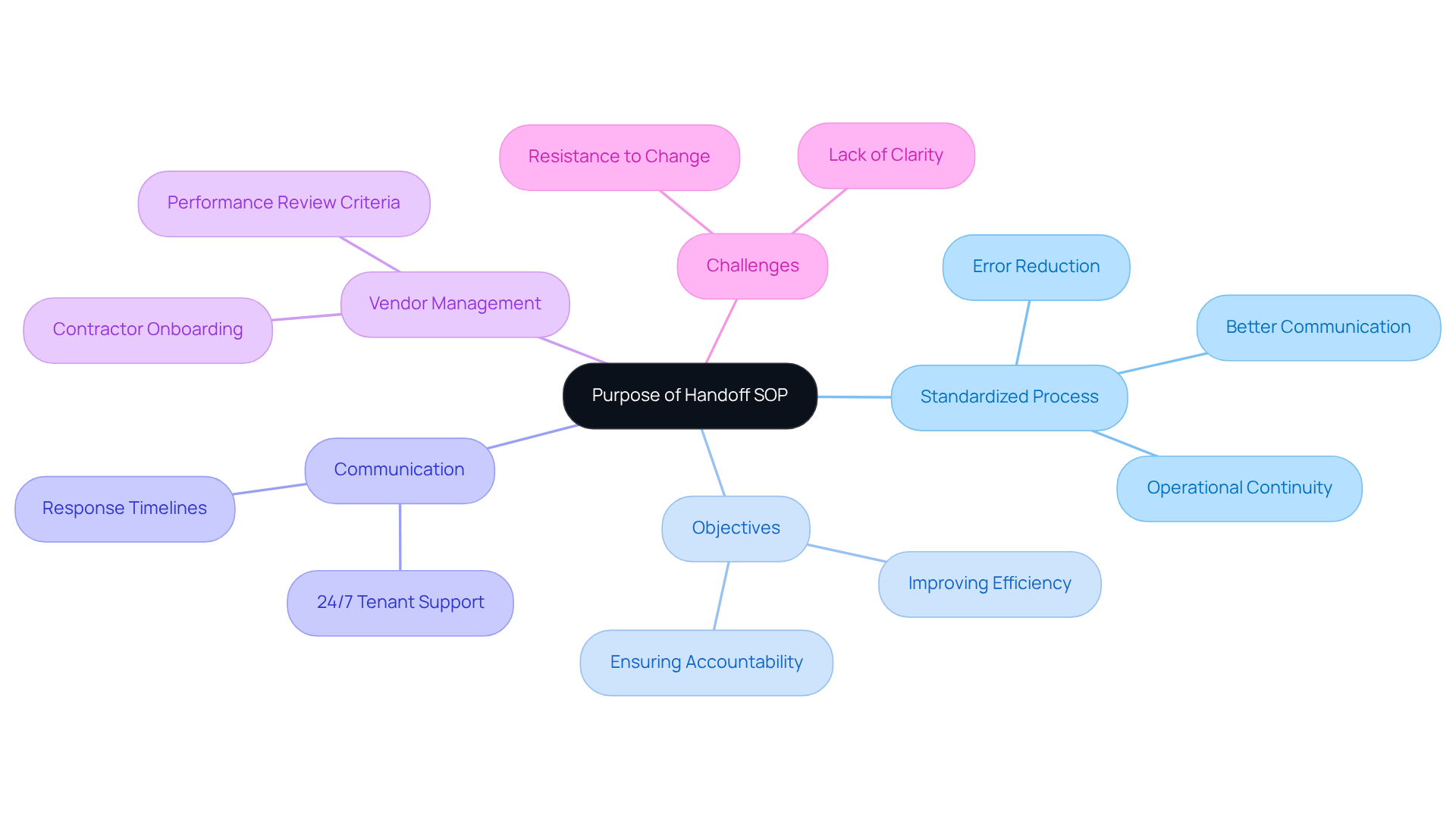
Establishing a standardized process for transferring responsibilities is crucial for effective property management. The purpose of the standard operating procedure for hand off is to create a consistent method for transferring responsibilities and information between members or departments. This approach helps maintain operational continuity, reduces errors, and fosters better communication.
By clearly defining the objectives of the handoff, such as improving efficiency and ensuring accountability, The Housing Guild can uphold high standards in property management. For instance, when a property manager transfers duties to a maintenance team, a clear SOP prevents miscommunication about urgent repairs. This ensures resident needs are met promptly.
Tenants can access 24/7 support through The Housing Guild’s Tenant Portal, allowing them to pay rent, submit maintenance requests, and communicate seamlessly with property management. Furthermore, defining channels for communication with residents and establishing timelines for responses are essential for improving relations with them.
Incorporating vendor management SOPs is also vital, as it governs contractor onboarding and performance review criteria, which are crucial when transferring responsibilities. Regular reviews and updates of SOPs are necessary to keep them relevant and effective. Properties with documented procedures experience 23% fewer emergency maintenance calls.
Addressing potential pitfalls in the standard operating procedure for hand off implementation, such as resistance to change and lack of clarity, can further enhance the effectiveness of the standard operating procedure for hand off. By addressing these challenges, The Housing Guild can significantly improve its property management outcomes.
Outline Key Components of the Handoff SOP
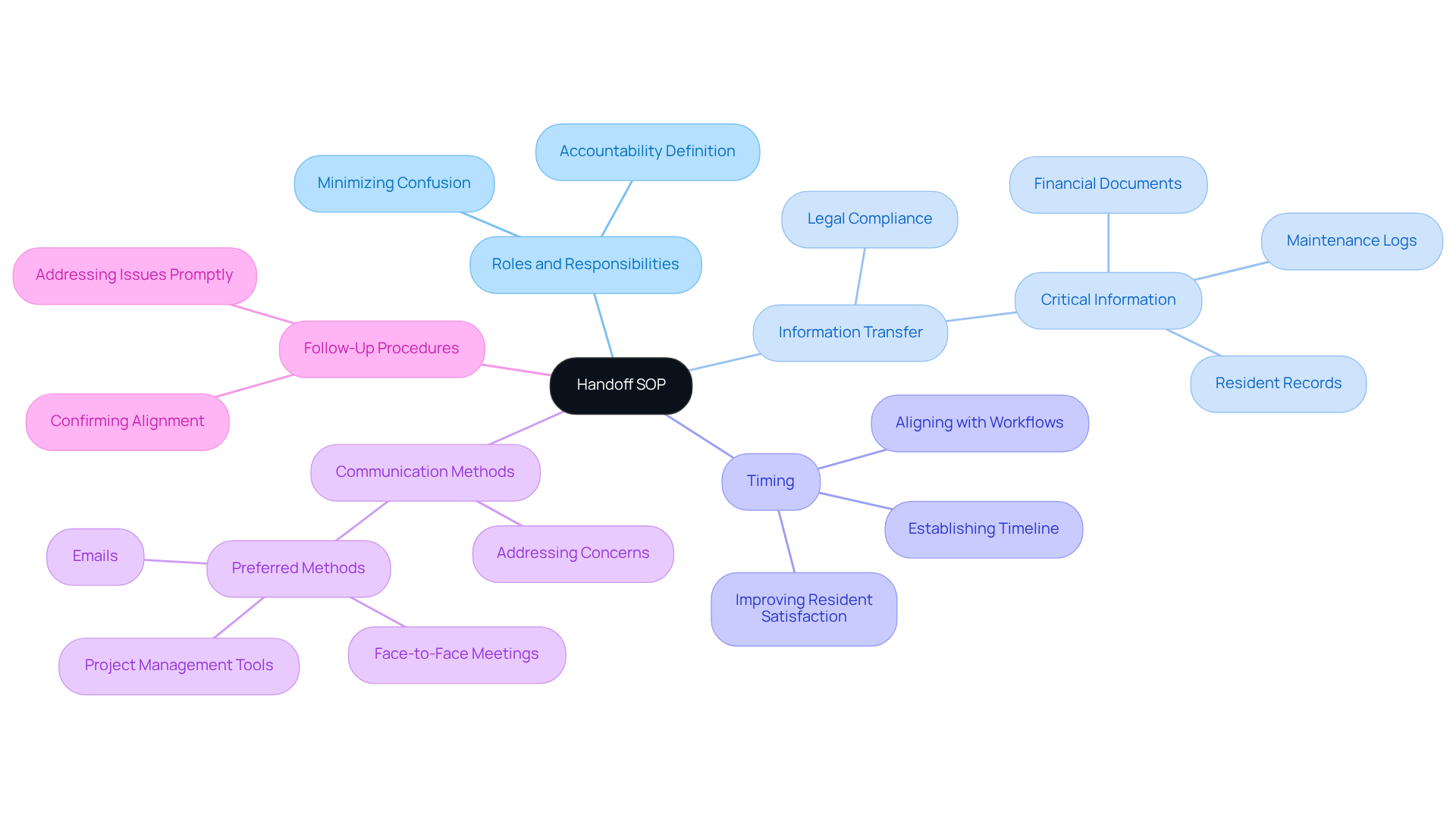
A well-defined standard operating procedure for hand off is essential for ensuring smooth transitions in property management. Key Components of the Handoff SOP:
- Roles and Responsibilities: Clearly define who is accountable for each aspect of the transition process. This ensures accountability and minimizes confusion during transitions.
- Information Transfer: Specify the critical information that must be communicated, including resident records, financial documents, and maintenance logs. This step is essential for keeping operations running smoothly and following the standard operating procedure for hand off to meet legal requirements.
- Timing: Establish a timeline for when the transfer should occur, ideally aligning it with operational workflows to prevent disruptions. A well-timed transfer can greatly improve resident satisfaction and retention.
- Communication Methods: Outline preferred communication methods, whether face-to-face meetings, emails, or project management tools. Effective communication is essential for addressing any concerns and ensuring all parties are informed.
- Follow-Up Procedures: Include steps for follow-up to confirm that all parties are aligned and any issues are promptly addressed. For instance, in The Housing Guild’s context, when a leasing agent transfers a new resident to the property management group, they must adhere to the standard operating procedure for hand off to convey the resident’s preferences and any special requests to ensure a smooth transition.
By implementing these key components, property managers can significantly enhance both operational efficiency and tenant satisfaction.
Implement and Train on the Handoff SOP
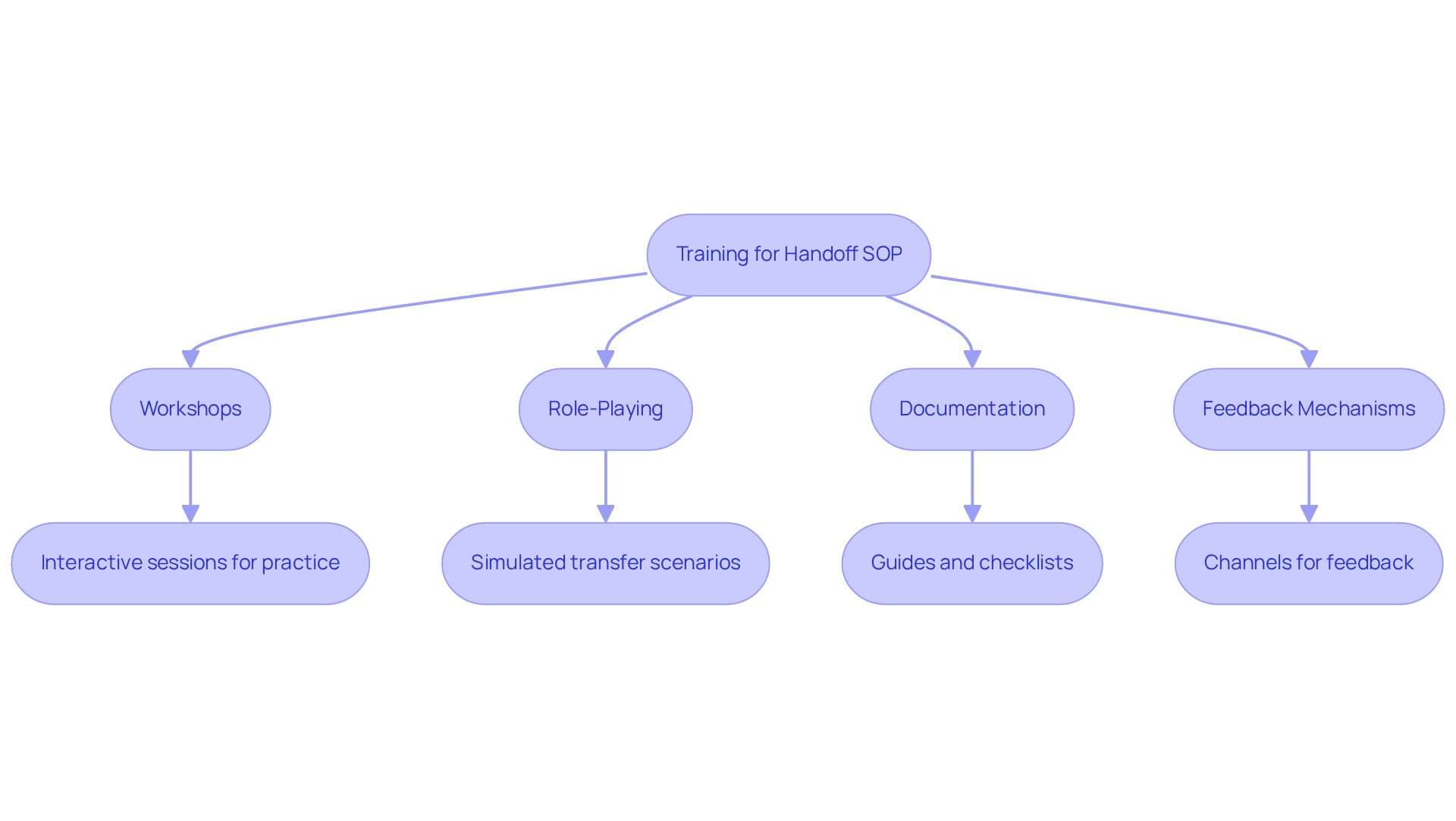
To ensure the successful implementation of the standard operating procedure for hand off, comprehensive training for all relevant staff is essential. This training will encompass:
- Workshops: Interactive sessions that allow members to practice the transfer process in real scenarios.
- Role-Playing: Simulated transfer situations where employees can role-play different scenarios to better understand their roles.
- Documentation: Providing easy-to-follow guides and checklists that outline the SOP steps.
- Feedback Mechanisms: Establishing channels for members to provide feedback on the SOP and suggest improvements.
For instance, following a training session, members will execute a mock transfer and discuss any challenges faced, fostering continuous improvement of the standard operating procedure for hand off.
Review and Update the Handoff SOP Regularly
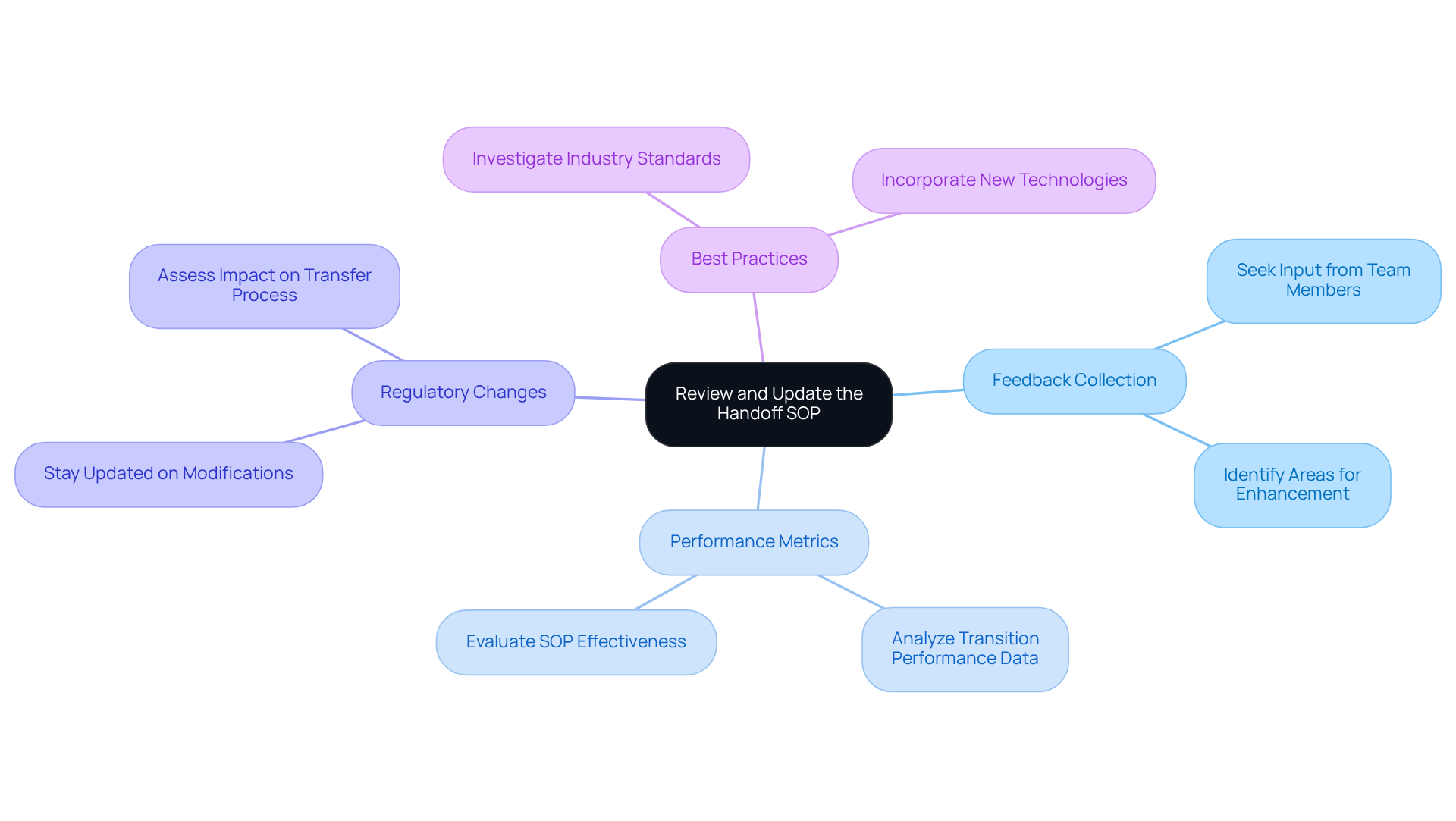
To maintain the effectiveness of the standard operating procedure for hand off, it is essential to have a structured review process. This review process should encompass several key components:
- Feedback Collection: Actively seek input from team members who regularly utilize the SOP to pinpoint areas for enhancement.
- Performance Metrics: Analyze performance data concerning transitions to evaluate the SOP’s effectiveness.
- Regulatory Changes: Remain updated on any regulatory modifications that could impact the transfer process.
- Best Practices: Investigate industry best practices and integrate them into the SOP.
For instance, should new technology arise that enhances communication during handoffs, it must be incorporated into the SOP to boost efficiency. Regular reviews ensure that the standard operating procedure for hand off remains relevant and effective in facilitating smooth transitions.
Conclusion
Without a robust standard operating procedure (SOP) for handoffs, property management can struggle with inefficiencies and miscommunication. Establishing a structured SOP is essential for enhancing operational efficiency and ensuring seamless transitions within property management. Implementing a structured approach allows The Housing Guild to reduce errors, enhance communication, and uphold high service standards. This commitment to excellence benefits the organization and boosts tenant satisfaction and trust.
Key components of an effective handoff SOP include:
- Clearly defined roles and responsibilities
- Timely information transfer
- Established communication methods
Regular training and updates are essential for keeping the SOP relevant, enabling staff to adapt and improve processes. By addressing potential challenges and incorporating feedback, The Housing Guild can foster a culture of accountability and responsiveness, ultimately leading to better property management outcomes.
In conclusion, the importance of a well-crafted handoff SOP cannot be overstated. It serves as a foundation for operational success, ensuring that all team members are aligned and informed. Organizations should prioritize the development and maintenance of these procedures to enhance their service delivery. Prioritizing the development of effective handoff SOPs can transform property management practices, leading to enhanced service delivery and tenant satisfaction.
Frequently Asked Questions
What is the purpose of the Handoff Standard Operating Procedure (SOP) in property management?
The purpose of the Handoff SOP is to establish a standardized process for transferring responsibilities and information between members or departments, which helps maintain operational continuity, reduces errors, and fosters better communication.
How does the Handoff SOP improve efficiency and accountability at The Housing Guild?
By clearly defining the objectives of the handoff, such as improving efficiency and ensuring accountability, The Housing Guild can uphold high standards in property management, ensuring that responsibilities are transferred smoothly and effectively.
What role does the Tenant Portal play in communication and support for tenants?
The Tenant Portal allows tenants to access 24/7 support, enabling them to pay rent, submit maintenance requests, and communicate seamlessly with property management, which enhances overall tenant satisfaction.
Why is it important to define channels for communication with residents?
Defining channels for communication and establishing timelines for responses are essential for improving relations with residents, ensuring that their needs are addressed promptly and effectively.
What is the significance of incorporating vendor management SOPs in the handoff process?
Incorporating vendor management SOPs is vital as it governs contractor onboarding and performance review criteria, which are crucial when transferring responsibilities to ensure quality service and accountability.
How often should the SOPs be reviewed and updated?
Regular reviews and updates of SOPs are necessary to keep them relevant and effective, ensuring that property management practices adapt to changing needs and circumstances.
What impact do documented procedures have on emergency maintenance calls?
Properties with documented procedures experience 23% fewer emergency maintenance calls, indicating that clear SOPs can significantly reduce urgent issues and improve overall management efficiency.
What challenges might arise during the implementation of the Handoff SOP?
Potential pitfalls include resistance to change and lack of clarity, which can hinder the effectiveness of the SOP. Addressing these challenges is crucial for improving property management outcomes at The Housing Guild.
List of Sources
- Define the Purpose of the Handoff SOP
- Property Management SOPs: Key Procedures Every Property Needs (https://coastlineequity.net/insights/property-management-sops-key-procedures-every-property-needs)
- Mastering Property Management: Essential Best Practices for Success | APM Help (https://apmhelp.com/blog/general/mastering-property-management-essential-best-practices-for-success)
- Where to Build Standard Operating Procedures for Landlords Effectively – Iconic Property Management (https://iconicpm.com/glossary/where-to-build-standard-operating-procedures-for-landlords-effectively)
- Master Property Management Standard Operating Procedures for Success (https://sowflow.io/blog-post/master-property-management-standard-operating-procedures-for-success)
- Standard Operating Procedures for Quality Over Speed in Property Management (https://www.housingguild.com/standard-operating-procedures-for-quality-over-speed-in-property-management)
- Outline Key Components of the Handoff SOP
- 4 Essential Policy Tips for Hand Off in Property Management (https://www.housingguild.com/4-essential-policy-tips-for-hand-off-in-property-management)
- Property Management Handoff: What Owners Need to Know (https://rentriq.io/blog/property-management-handoff-what-owners-need-to-know)
- How to Handle Hand Off in Property Management: 4 Essential Steps (https://www.housingguild.com/how-to-handle-hand-off-in-property-management-4-essential-steps)
- Property Management Owner Exit Handoff Checklist | JHA Solutions (https://jhasolutions.com/blog/property-management-owner-exit-records-handoff-checklist)
- Tool: Handoff | Agency for Healthcare Research and Quality (https://ahrq.gov/teamstepps-program/curriculum/communication/tools/handoff.html)
- Implement and Train on the Handoff SOP
- 10 Proven Ways to Improve Property Management Training in Multifamily (https://gracehill.com/blog/top-10-tips-for-effective-employee-training-and-development)
- Security Training in Property Management: Building Safer, More Prepared Properties (https://transwestern.com/news-detail/security-training-in-property-management-building-safer-more-prepared-properties)
- 3 Benefits of Making Role-Play Part of Training (https://trainingmag.com/3-benefits-of-making-role-play-part-of-training)
- How to Train Your Property Management Team (https://propertymanagementconsulting.com/blog/property-management-operations-training-your-team-for-success)
- The Importance of Role-Playing in Customer Experience Training (https://linkedin.com/top-content/customer-experience/improving-customer-experience/the-importance-of-role-playing-in-customer-experience-training)
- Review and Update the Handoff SOP Regularly
- Property Management SOPs: Key Procedures Every Property Needs (https://coastlineequity.net/insights/property-management-sops-key-procedures-every-property-needs)
- Property Management SOPs: Templates and Examples (https://platuni.com/blog/property-management-standard-operating-procedures)
- Why your co-op should review its property management every year (https://agency.coop/news/why-your-co-op-should-review-its-property-management-every-year)
- Standard Operating Procedures Every Property Manager Should Review Annually — Westhaven Group Property Management (https://westhavengroup.ca/industry-news/standard-operating-procedures-every-property-manager-should-review-annually)
Owner Resources
Want The Housing Guild to handle this for you?
We manage San Francisco Bay Area buildings for owners — leasing, compliance, maintenance, and accounting. Get a free proposal, or explore the service.