
Owner-Centric Property Management
Compare Self Management vs Property Manager: Scope of Work Explained

Introduction
For landlords, the choice between self-management and hiring a professional property manager can significantly impact their investment success. Each approach carries its own responsibilities and challenges, including:
- Tenant screening
- Maintenance coordination
- Legal compliance
- Financial oversight
Landlords must weigh the potential cost savings of self-management against the time and expertise required to manage their investments effectively.
What key factors should landlords prioritize to determine the best management style for their unique circumstances? Understanding these factors is crucial for landlords aiming to maximize their property’s potential in the competitive San Francisco market.
Define Self-Management and Property Management: Scope of Work
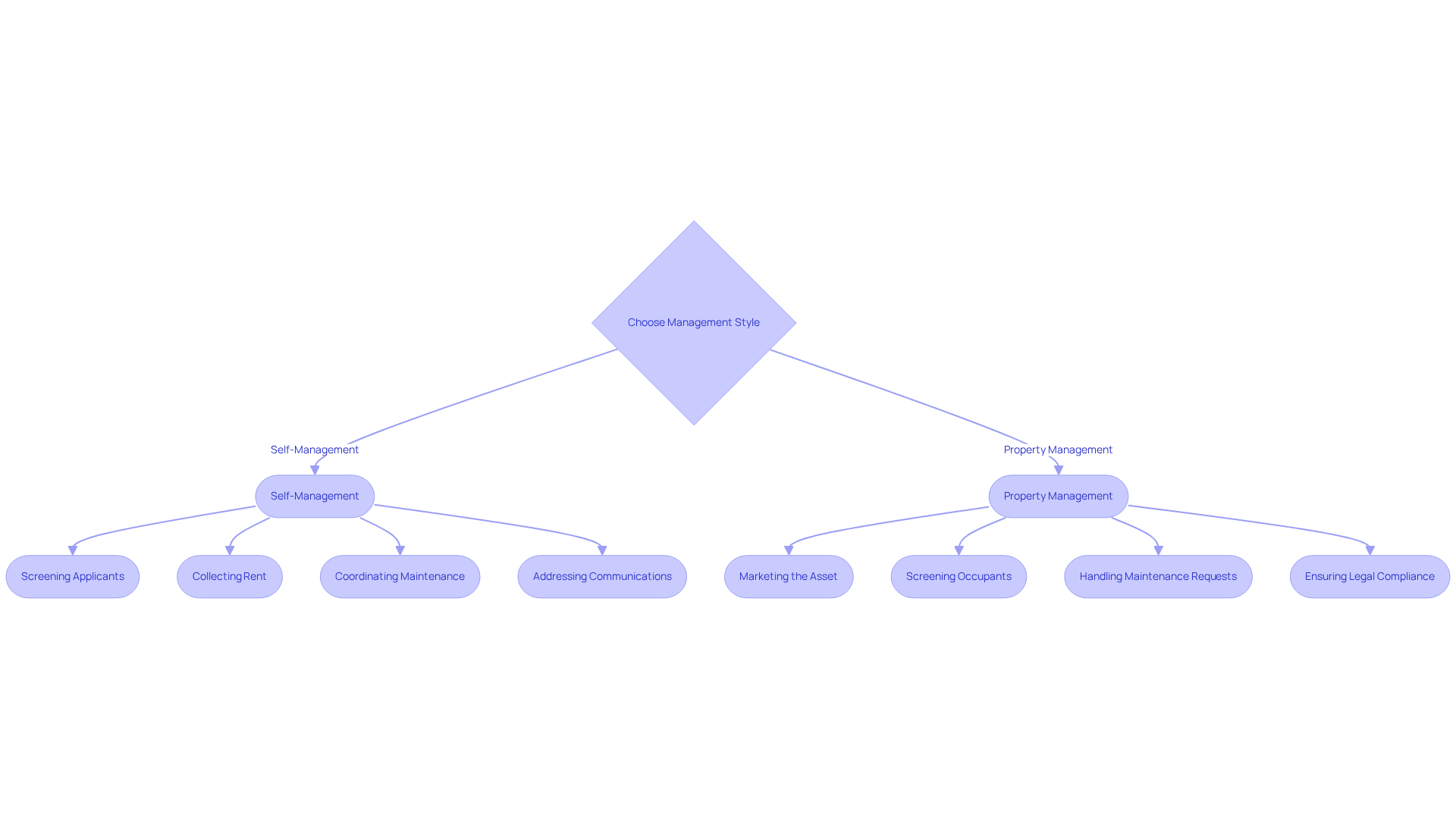
Property owners must compare self management vs property manager for scope of work when deciding whether to manage their rental properties themselves or hire a professional management firm. Self-management means that property owners take full responsibility for their rental properties. This includes tasks such as:
- Screening applicants
- Collecting rent
- Coordinating maintenance
- Addressing communications from residents
Owners must be readily available to resolve resident issues, oversee repairs, and ensure compliance with complex local laws, particularly in the San Francisco Bay Area, where regulations can be stringent.
On the other hand, real estate management entails employing a professional firm or individual to manage these duties. Managers of real estate typically offer a thorough range of services, including:
- Marketing the asset
- Screening occupants
- Collecting rent
- Handling maintenance requests
- Ensuring legal compliance
Their expertise and resources can optimize real estate performance, often leading to higher tenant satisfaction and reduced vacancy rates. For example, real estate firms can utilize advanced marketing strategies, such as 3D mapping and video tours, to attract potential tenants and reduce vacancy durations.
In the San Francisco Bay Area, self-management can increase profits by cutting out management fees, usually between 8% and 12% of monthly rent. However, self-management demands not only time but also a thorough grasp of local laws, which can be daunting for many owners. This distinction underscores the importance of evaluating how to compare self management vs property manager for scope of work in assessing one’s capacity and willingness to engage in property management. A case study emphasizes the importance to compare self management vs property manager for scope of work, showing that self-management is suitable for owners who live close to their units and own one or two, while hiring a manager is recommended for those with multiple units or who prefer not to handle tenant interactions directly.
In the end, self-management gives owners direct control over their properties, but it also demands a lot of time and effort. In contrast, real estate oversight offers a hands-off approach with professional supervision, enabling owners to concentrate on other investments or personal commitments while ensuring their assets are well-maintained and compliant with local regulations. Choosing the right management approach can significantly impact both profitability and peace of mind for property owners.
Evaluate the Pros of Self-Management and Property Management
Advantages of Self-Management
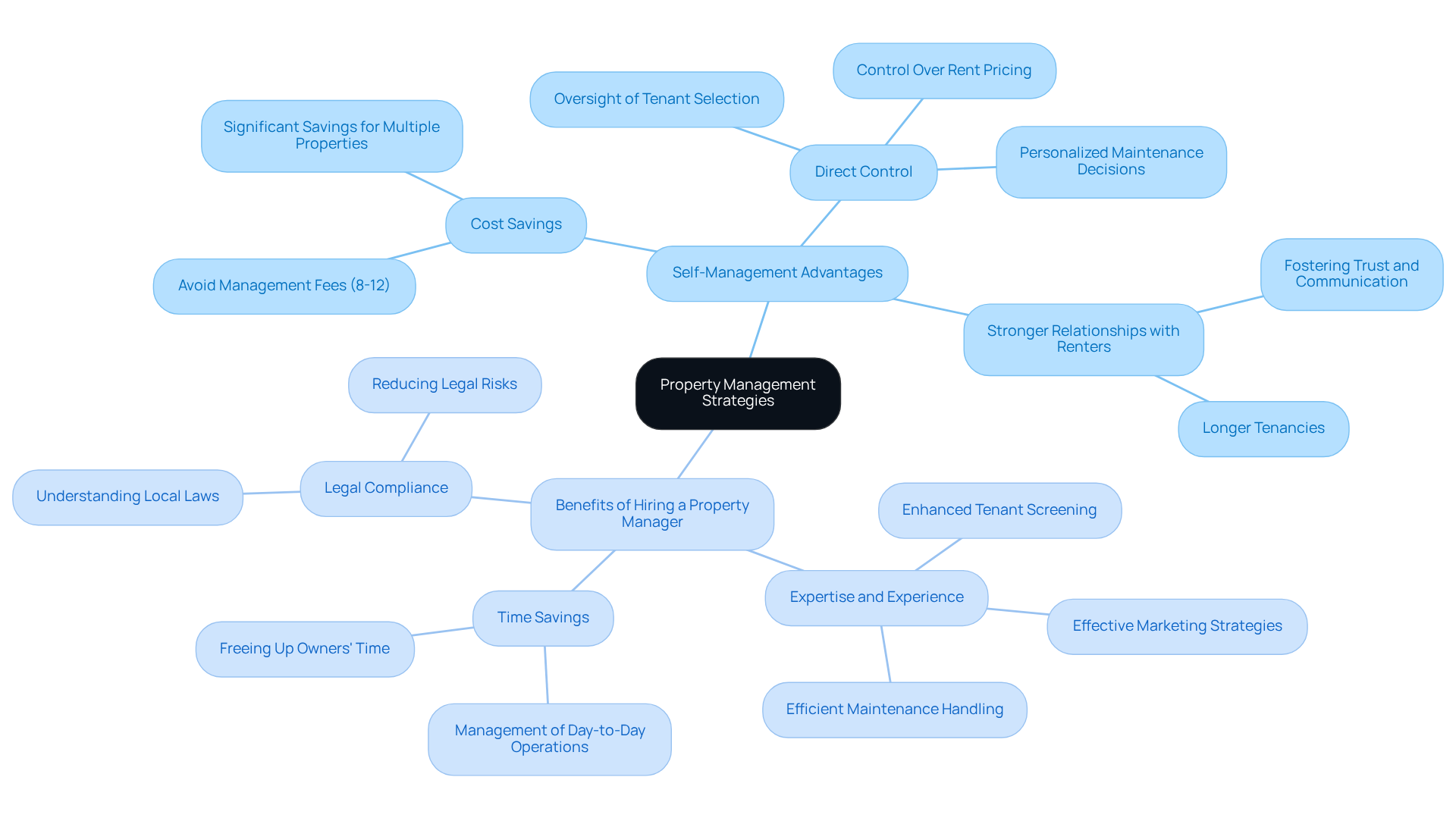
- Cost Savings: Managing properties independently allows owners to avoid management fees, which typically range from 8% to 12% of monthly rent. This can result in substantial savings, particularly for owners with multiple properties.
- Direct Control: Owners maintain complete oversight over occupant selection, rent pricing, and maintenance decisions, enabling a personalized management approach that aligns with their vision.
- Stronger Relationships with Renters: Self-managing landlords often cultivate closer connections with renters, fostering trust and communication that can lead to longer tenancies.
Benefits of Hiring a Property Manager
- Expertise and Experience: Property managers bring valuable industry knowledge and experience. This expertise enhances tenant screening, marketing strategies, and the efficient handling of maintenance issues.
- Time Savings: Property management companies manage day-to-day operations, freeing up owners’ time for personal or professional pursuits.
- Legal Compliance: Professional real estate managers understand local laws and regulations. Their expertise significantly reduces the risk of legal issues arising from non-compliance, particularly in the Bay Area’s complex regulatory environment.
Assess the Cons of Self-Management and Property Management
While self-management offers certain advantages, the challenges it presents can be substantial and varied:
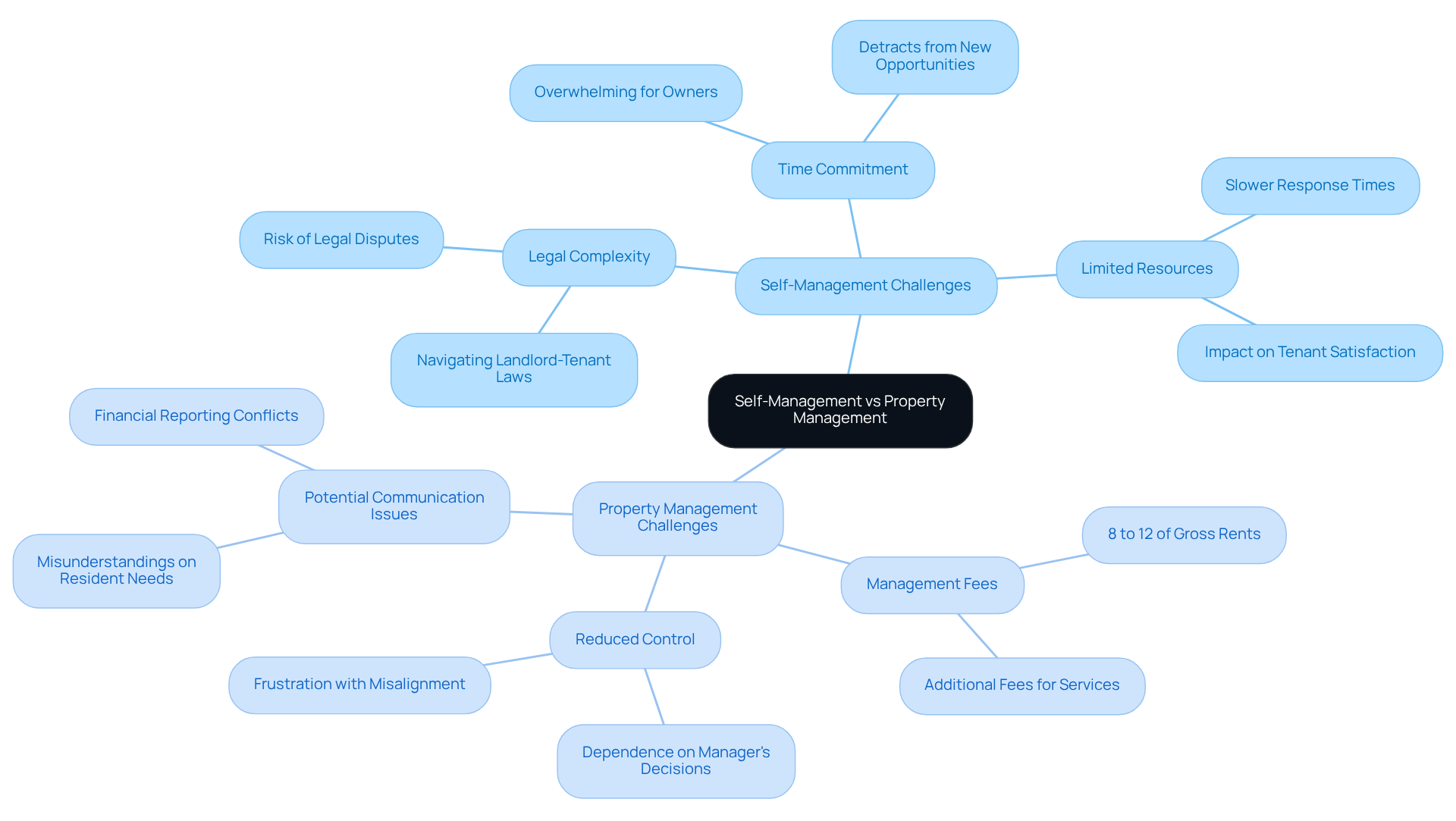
- Time Commitment: Managing a property demands considerable time and effort, which can be overwhelming for owners, particularly those juggling multiple properties or other commitments. Many self-managing landlords report that the time spent on oversight tasks detracts from opportunities to evaluate new acquisitions or execute exchanges.
- Legal Complexity: Self-managing landlords must navigate intricate landlord-tenant laws that can frequently change. In the San Francisco Bay Area, cities like Oakland and San Jose have complex rent control regulations, exposing self-managing landlords to potential legal risks. Failure to comply with these laws can result in costly legal disputes and penalties.
- Limited Resources: Self-managing landlords frequently lack access to the professional networks that management companies leverage. This can lead to slower response times for maintenance and tenant issues, ultimately affecting tenant satisfaction and retention.
Conversely, hiring a property manager also presents its own set of disadvantages:
- Management Fees: The cost of hiring a property manager typically ranges from 8% to 12% of gross monthly rents, which can significantly impact overall profitability, especially for owners operating on tight margins. Additional fees for lease placements and maintenance can further strain finances.
- Reduced Control: Property owners may experience a loss of authority over their assets, as they must depend on the administrator’s decisions and processes. This can result in frustration, especially if the owner’s vision for management does not align with that of the supervisor.
- Potential Communication Issues: Miscommunication between owners and managers can lead to misunderstandings regarding resident needs, maintenance, and financial reporting. Effective communication is crucial to ensure that both parties are aligned on expectations and responsibilities.
Ultimately, the decision requires us to compare self-management vs property manager for scope of work, hinging on a careful evaluation of these challenges and benefits. Professional oversight, such as that offered by The Housing Guild, can alleviate many of these burdens through comprehensive services including 24/7 resident support, innovative leasing methods utilizing 3D mapping and video tours, and a dedicated Resident Portal for seamless communication and maintenance requests. The Tenant Portal allows tenants to pay rent online, submit maintenance requests, and communicate easily, enhancing overall satisfaction. However, this professional management comes at a cost that must be carefully weighed against the benefits.
Determine the Right Choice: Factors to Consider for Your Management Style
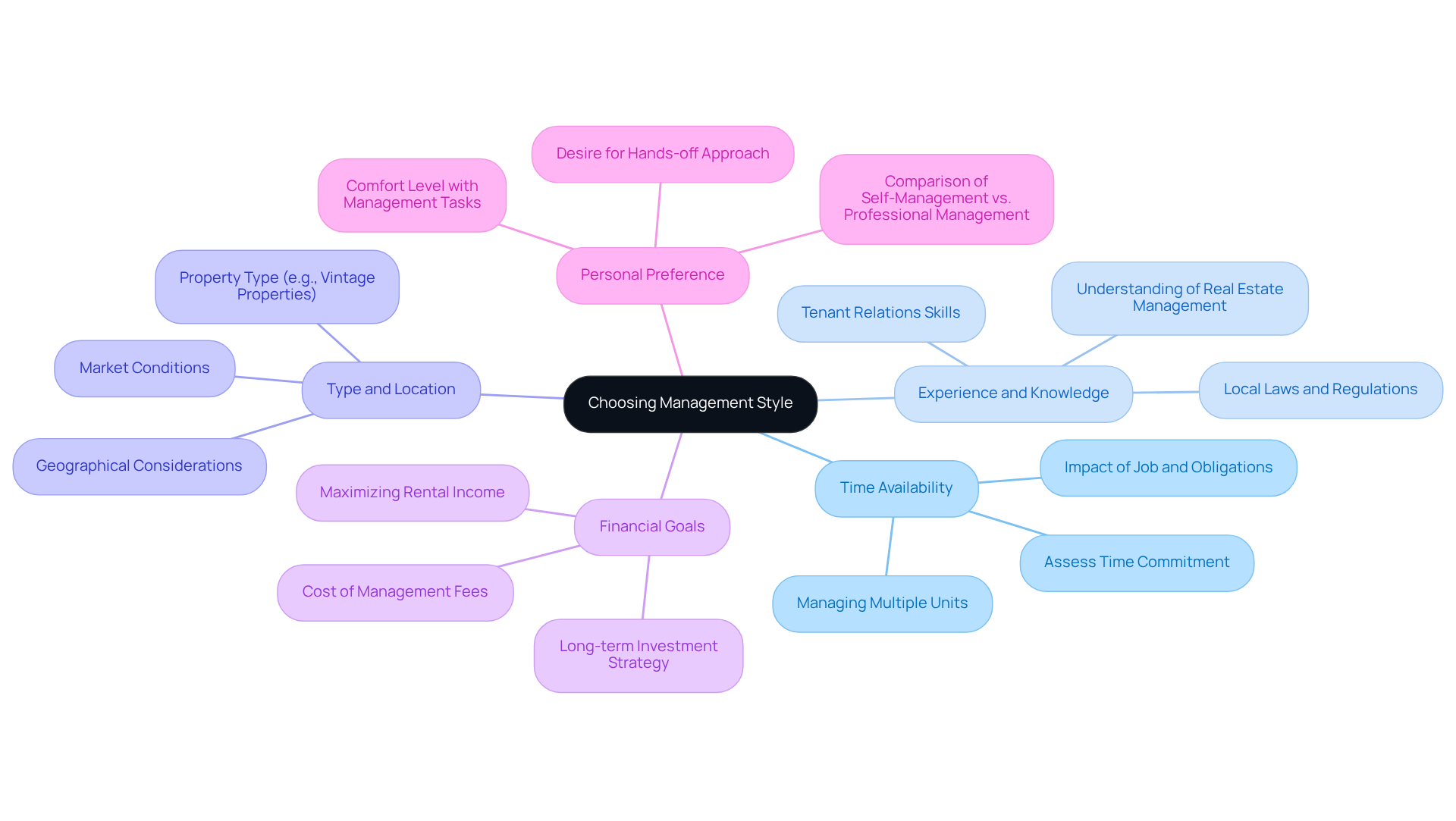
When weighing the options of self-management versus hiring a property manager, several critical factors must be considered:
- Time Availability: Assess how much time you can realistically dedicate to managing your property. If you have a demanding job or other obligations, employing a real estate supervisor may be more practical.
- Experience and Knowledge: Evaluate your understanding of real estate management, local laws, and tenant relations. If you lack experience, a real estate professional can provide valuable insights.
- Type and Location: Consider the kind of asset you own and its location. Vintage properties, like those managed by The Housing Guild, may require specialized knowledge that a manager can offer.
- Financial Goals: Reflect on your financial objectives. If maximizing rental income is a priority, weigh the costs of management fees against potential increases in revenue from professional management.
- Personal Preference: Ultimately, your comfort level with managing tenants and maintenance will significantly influence your decision. If you prefer a hands-off approach, it is important to compare self management vs property manager for scope of work when hiring for your real estate.
In the competitive San Francisco market, it is crucial to compare self management vs property manager for scope of work to understand these factors and make informed decisions about property management. For instance, investors overseeing multiple units often find that self-management becomes unfeasible beyond 10 to 15 units, highlighting the importance of professional assistance as portfolios expand. Hiring a property oversight firm like The Housing Guild can significantly ease the burden of managing rental properties. The Housing Guild offers an Owner Portal that streamlines communication, allowing owners to view financial statements, access shared documents, and set up secure online payment options 24/7. This ensures that owners can focus on their investments while benefiting from expert management services, including 24/7 tenant support and innovative leasing solutions. Ultimately, the right choice can significantly impact your investment’s success and your peace of mind.
Conclusion
Deciding between self-management and hiring a property manager is a critical choice for property owners in the San Francisco Bay Area. Each approach presents distinct advantages and challenges that can significantly impact both profitability and personal satisfaction. While self-management offers direct control and potential cost savings, it requires significant time and expertise to navigate local regulations. Conversely, engaging a professional management firm like The Housing Guild provides access to specialized knowledge and resources, ensuring compliance and enhancing tenant satisfaction, albeit at a cost.
The article highlights key insights into the responsibilities associated with both self-management and property management. Self-managing landlords often build closer relationships with tenants and save on management fees, but they must also navigate the complexities of legal compliance and invest significant time. On the other hand, property managers bring valuable expertise, streamline operations, and mitigate legal risks, making them an attractive option for owners with multiple properties or those seeking a hands-off approach. The Housing Guild exemplifies this professional management, offering comprehensive services that include 24/7 support and innovative leasing strategies.
Ultimately, the decision depends on various factors unique to each owner, including:
- Time availability
- Experience
- Property type
- Financial goals
Evaluating these factors is crucial for property owners in the Bay Area to determine the most effective management style. Whether opting for self-management or professional oversight, understanding the scope of work involved can lead to better outcomes and peace of mind. Engaging with a trusted partner like The Housing Guild can alleviate many burdens, allowing owners to focus on their investments while ensuring their properties are well-managed and compliant with local laws. Understanding these dynamics can empower property owners to make informed decisions that align with their investment strategies.
Frequently Asked Questions
What is self-management in property management?
Self-management means that property owners take full responsibility for their rental properties, which includes tasks such as screening applicants, collecting rent, coordinating maintenance, and addressing communications from residents.
What are the responsibilities of a property manager?
A property manager typically handles a range of services including marketing the asset, screening occupants, collecting rent, handling maintenance requests, and ensuring legal compliance.
What are the advantages of self-management?
Self-management can increase profits by eliminating management fees, which usually range from 8% to 12% of monthly rent. It allows owners to have direct control over their properties.
What are the challenges of self-management?
Self-management requires a significant time commitment and a thorough understanding of complex local laws, which can be daunting for many property owners.
When is self-management suitable for property owners?
Self-management is suitable for owners who live close to their rental units and own one or two properties, as they can more easily manage tenant interactions and property upkeep.
When should property owners consider hiring a property manager?
Hiring a property manager is recommended for owners with multiple units or those who prefer not to handle tenant interactions directly, as it allows for a more hands-off approach.
How can professional property management optimize real estate performance?
Professional property management can optimize performance through advanced marketing strategies, such as 3D mapping and video tours, which can attract potential tenants and reduce vacancy durations.
What impact does the choice between self-management and hiring a property manager have on property owners?
The choice can significantly impact both profitability and peace of mind for property owners, as self-management demands more time and effort, while professional management provides oversight and compliance with local regulations.
List of Sources
- Define Self-Management and Property Management: Scope of Work
- Hiring a Marin Property Management Company vs. Self Management: What is Right for Me? – North Bay Property Services (https://northbayps.com/hiring-a-marin-property-management-company-vs-self-management-what-is-right-for-me)
- Compare Self Management vs Property Manager: Key Insights for Owners (https://www.housingguild.com/compare-self-management-vs-property-manager-key-insights-for-owners)
- San Francisco Bay Real Estate Management vs DIY Management: Which Is Better? (https://kennyrealty.com/blog/san-francisco-bay-real-estate-management-vs-diy-management-which-is-better)
- Self-Managing vs Property Manager: A Bay Area Guide (https://laxmitoprealtor.com/investing/self-managing-vs-property-manager?srsltid=AU7gw4XlHWcV9hOGiE9oMgKvi49rY35UCgW0F_9lNVezEn_lKWJbuX7a)
- Evaluate the Pros of Self-Management and Property Management
- Compare Self Management vs Property Manager for Better Retention (https://www.housingguild.com/compare-self-management-vs-property-manager-for-better-retention)
- Compare Self Management vs Property Manager for Rental Success (https://www.housingguild.com/compare-self-management-vs-property-manager-for-rental-success)
- Pierce County Property Management, Pierce County Property Managers, Pierce County Property Management Companies. Willow Properties (https://willowproperties.com/blog/self-managing-vs-hiring-a-property-manager-pros–cons)
- Compare Self Management vs Property Manager for Effective Transition Planning (https://www.housingguild.com/compare-self-management-vs-property-manager-for-effective-transition-planning)
- Property Management vs. Self-Management for Bay Area Investors | The R&Z Group (https://rzadvisors.com/blog/property-management-vs-self-management-what-bay-area-multifamily-investors-should-consider-before-deciding)
- Assess the Cons of Self-Management and Property Management
- Hiring a Marin Property Management Company vs. Self Management: What is Right for Me? – North Bay Property Services (https://northbayps.com/hiring-a-marin-property-management-company-vs-self-management-what-is-right-for-me)
- Property Management vs. Self-Management for Bay Area Investors | The R&Z Group (https://rzadvisors.com/blog/property-management-vs-self-management-what-bay-area-multifamily-investors-should-consider-before-deciding)
- Pierce County Property Management, Pierce County Property Managers, Pierce County Property Management Companies. Willow Properties (https://willowproperties.com/blog/self-managing-vs-hiring-a-property-manager-pros–cons)
- ‘Get them out’: Alleged squatters take over $4.4M SF property, neighbors wait for city to act (https://abc7news.com/post/alleged-squatters-take-44-million-san-francisco-sea-cliff-property-year-city-attorney-files-lawsuit/19807938)
- Determine the Right Choice: Factors to Consider for Your Management Style
- Property Management vs. Self-Management for Bay Area Investors | The R&Z Group (https://rzadvisors.com/blog/property-management-vs-self-management-what-bay-area-multifamily-investors-should-consider-before-deciding)
- naisouthcoast.com (https://naisouthcoast.com/-blog/when-to-hire-a-property-manager-vs-selfmanage)
- Property Management vs Self Management (https://coloradorpm.com/property-management-vs-self-management)
- Compare Self Management vs Property Manager for Effective Transition Planning (https://www.housingguild.com/compare-self-management-vs-property-manager-for-effective-transition-planning)
- Self-management vs. Hiring a property management company (https://fsresidential.com/new-york/news-events/articles-and-news/hiring-a-property-manager-self-management-vs-profe)
Owner Resources
Want The Housing Guild to handle this for you?
We manage San Francisco Bay Area buildings for owners — leasing, compliance, maintenance, and accounting. Get a free proposal, or explore the service.